


BMW North America Celebrates 40 Years
October marks the 40th anniversary of BMW’s official entry into the North American market, however the history of split kidney-grilled “Bimmers” goes back a bit earlier in the U.S. than the official introduction of the BMW 3 Series E 21 in 1975 for the 1976 model year. While the “Dreier” certainly made its mark in the nascent executive compact car market and convinced a generation of upmarket drivers to embrace the significantly more powerful BMW 3 Series E30 in the 1980s, it actually built upon a small core of aficionados who had been collecting Bavarian Motor Works vehicles since they were first imported to the U.S. by famed dealer Max Hoffman in 1954.
Born in Austria in 1904, Hoffman later migrated to the United States and, by the 1950s, had established an influential auto import business that was based in New York City. Though he happily fulfilled orders for European cars that were already in demand among prosperous post-war Americans, Hoffman quickly gained a reputation for suggesting rarer types to discerning clients and taking the risks that are associated with introducing unfamiliar brands through an independently-run dealership network. Among a number of both rare and now commonplace marques, he decided to import his first BMWs in 1954 and, as the decade went on, actually had a hand in suggesting some of the design features that were incorporated into the stunning BMW 507.
It wasn’t until the BMW “New Class” appeared in 1962 that this part of his portfolio began to make a true profit, however. Beginning with the BMW 1500, this family of vehicles was powered by front-mounted M10 Straight-4 engines, had unitary construction, fully independent suspension with MacPherson struts in front and semi-trailing arms in the rear, and front disc brakes. By the late 1960s they had evolved, partially at the suggestion of Hoffman, into the more robust, sporty BMW 2002. Featuring a 1,900 cc engine that was sold with either a base single carburetor or a high performance, high compression dual-carburetor, it was this model that was famously reviewed by auto writer David E. Davis Jr. in a 1968 Car and Driver article entitled “Turn Your Hymnals To 2002”.
In retrospect, it’s easy to see why the 2002 made such a splash in the industry press of the time. While European cars had made their way into the American consciousness as early as the 1950s, they were mostly in the form of British roadsters that, while attractive and offering great handling, were woefully underpowered. Italian firms had managed to sell a few select high performance models among upmarket buyers by the 1960s, however these cars were considered difficult to maintain and closer to show pieces than true driver’s vehicles. On the domestic front, of course, Detroit was at a zenith that was marked by a wide field of incredibly powerful muscle cars, however while those vehicles exuded horsepower and had iconic styling, they were built for going fast and straight over quarter mile stretches and, with one or two exceptions, had limited handling. The market for performance vehicles, simply put, was constrained both in terms of categories and capability.
The BMW 2002 that premiered in 1968, on the other hand, had a power to weight ratio that, while it did not produce a top speed that approached the muscle and dedicated race cars of the day, afforded impressive acceleration, especially on curves. Its compact body, suspension, and wheelbase dimensions also meant that it was highly maneuverable, and it wasn’t long before the 2002 and its variants were found in racing circuits around the world.
The BMW 2002’s impact on the U.S. market wasn’t entirely due to performance, however. As one of the few compact executive sedans on the market, it filled a growing niche, as businessmen across the country realized that it was ideal for driving and parking in increasingly congested urban environments. In keeping with the already formidable mechanical reputation of Bavarian Motor Works, it was also reliable.
The retirement of the 2002 coincided with Hoffman’s decision to sell his distribution rights back to BMW in 1975, thus creating BMW North America. While the BMW 3 Series E21 initially had its detractors due to engine choices that were limited to the M10 I-4, the introduction of the more powerful M20 six-cylinders enabled the E21 to rebound and set the stage for the success of the BMW 3 Series E30 in the 1980s. Though Hoffman passed away in 1981, his wife soon established a charitable foundation in his name that, even today, carries on his legacy through philanthropic donations to groups that are involved in education, the arts, and medicine.
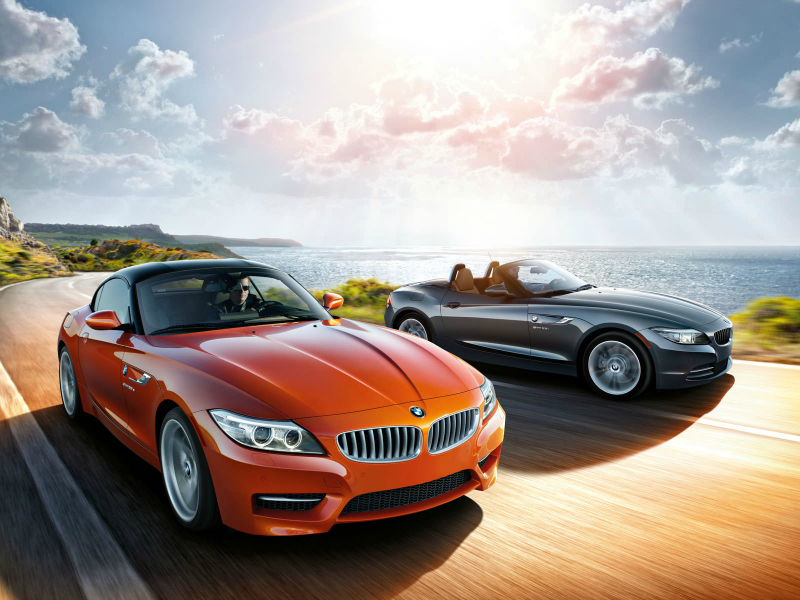
The legacy established by Max Hoffman and the engineers who created the likes of the BMW 2002 and BMW 3 Series E30 also lives on for drivers, as the current model lineup for BMW includes a number of autos, such as the 2016 BMW Z4 sDrive35i and 2016 BMW 6 Series 650i, that embody performance, luxury, and sound design. Vehicles like the 2016 BMW X3 xDrive28i even give consumers cargo and passenger-carrying capabilities that would have been unheard of back in Hoffman’s time. To become a part of this heritage, call BMW of Elmhurst at (844) 671-0006 or visit our showroom at 466 West Lake Street in Elmhurst to learn more about this year’s BMWs or schedule a test drive. We’re confident you’ll conclude, as was true in the era of the BMW 2002, that BMWs are still the ultimate driving machines.
0 comment(s) so far on BMW North America Celebrates 40 Years